
Who It Is For
Mid-market and regulated organizations — healthcare, government, education, and the MSPs/MSSPs who serve them — that need stronger identity assurance without adding friction their staff and users will resist. Also fits any business (including WordPress-based sites and B2C/B2B2C customer portals) that wants a branded, phishing-resistant login without building it themselves.
Why It Is Different
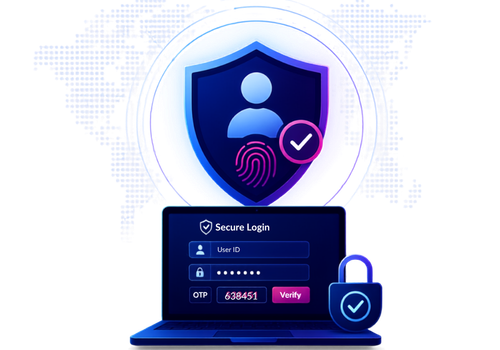
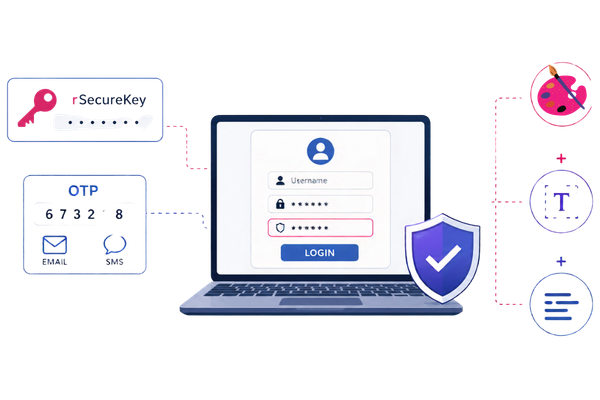
Rainbow Secure delivers this through rSecureKey, our flagship product, powered by Rainbow Secure Technology — a patented method of color, style, and formatting-position based interactive
authentication layered on top of the password or OTP. Even if the plain-text credential leaks, it is
insufficient without the exact formatting the authorized user applies, so stolen credentials stop being
useful to an attacker.
authentication layered on top of the password or OTP. Even if the plain-text credential leaks, it is
insufficient without the exact formatting the authorized user applies, so stolen credentials stop being
useful to an attacker.
Flagship Product Statement
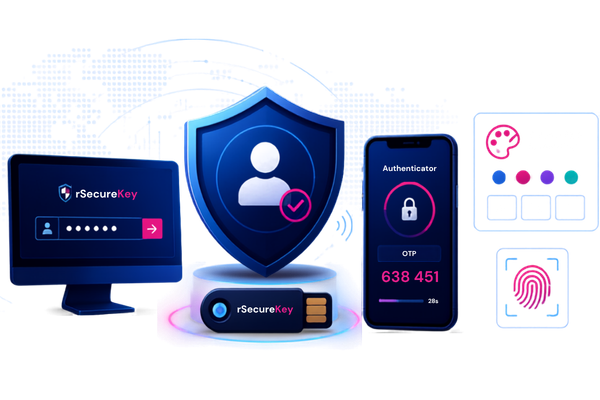
rSecureKey, Rainbow Secure's flagship Human-Verified MFA product, powered by Rainbow Secure Technology, makes stolen credentials insufficient.
rSecureKey is the flagship product of the Rainbow Secure platform, delivering Human-Verified
MFA. It's built on Rainbow Secure Technology — a patented, interactive authentication method based on color, style, and formatting position — adding a visual and cognitive verification layer to every login that's meaningful to the user but far harder for an attacker to reproduce from a leaked
password, code, or screen capture.
MFA. It's built on Rainbow Secure Technology — a patented, interactive authentication method based on color, style, and formatting position — adding a visual and cognitive verification layer to every login that's meaningful to the user but far harder for an attacker to reproduce from a leaked
password, code, or screen capture.

Assume credentials will be compromised

Do not rely on user awareness alone

Do not break during peak transaction spikes

Reduce fraud losses and investigation fatigue
Flagship Product Statement
Rainbow Secure Technology is the company's patented method; rSecureKey is the product built on it. Never say “rSecureKey technology” — say “rSecureKey, powered by Rainbow Secure Technology.”
Guardrail Note
Per Rainbow Secure brand guidance, avoid absolute claims (“impossible to hack,” “phishing-proof”). Use “makes stolen credentials insufficient,” “helps resist,” and “reduces the usefulness of stolen credentials” instead — strong, honest language builds more trust than exaggeration.

Your Biggest Security Risk May Already Be Inside Your Company
The most dangerous identity in your organization may not belong to an attacker. It may belong to an administrator.Organizations spend millions detecting external threats.But here’s an…
Read More →
MFA Is Not the Finish Line: Why Identity Security Must Move Beyond the Login
For years, organizations have treated authentication as a security checkpoint:Enter your password → complete MFA → get access.But the threat landscape has changed.Today, attackers don’t necessarily need…
Read More →
The SafePal Breach: When an Order-Tracking Flaw Becomes an Identity Security Crisis
What a crypto hardware-wallet data breach teaches every CISO about authorization, identity, and the danger of “non-critical” dataA cybersecurity incident does not always begin with…
Read More →