
Why It Matters

Image

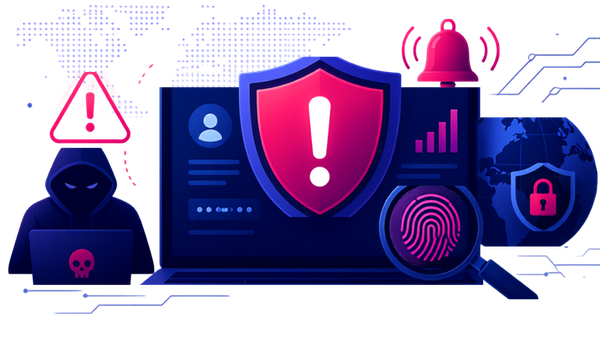
Many breaches do not begin with failed authentication.
They escalate because suspicious behavior goes unnoticed.
Common warning signs include:
  • Repeated failed login attempts
  • Impossible travel scenarios
  • Rapid login velocity across regions
  • Privileged login outside normal hours
  • Login attempts from unfamiliar devices
Without real-time alerting:
  • Security teams respond too late
  • Compromised sessions remain active
  • Administrative accounts are exploited
  • Incident response becomes reactive
Threat detection must be immediate, contextual, and actionable.

What Is Threat Detection & Alerting?


Rainbow Secure Threat Detection continuously analyzes authentication events and generates alerts when defined risk thresholds are exceeded.
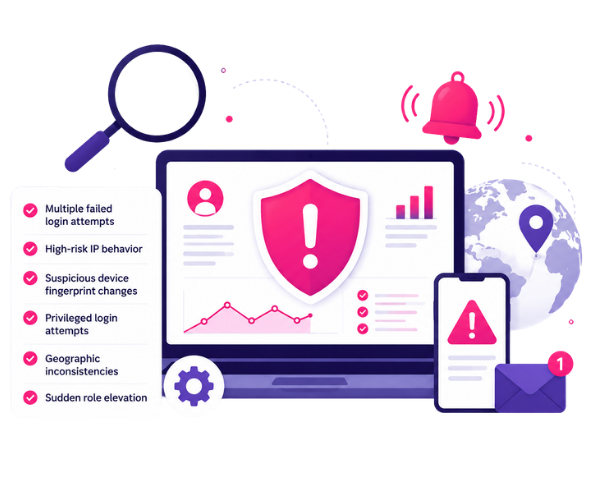
Alerts may be triggered by:
  • Multiple failed login attempts
  • Suspicious device fingerprint changes
  • Geographic inconsistencies
  • High-risk IP behavior
  • Privileged login attempts
  • Sudden role elevation
Alerts are delivered instantly to administrators for review and action.
Detection is automated.
Escalation is structured.
Response is policy-driven.
Image

Core Functional Components

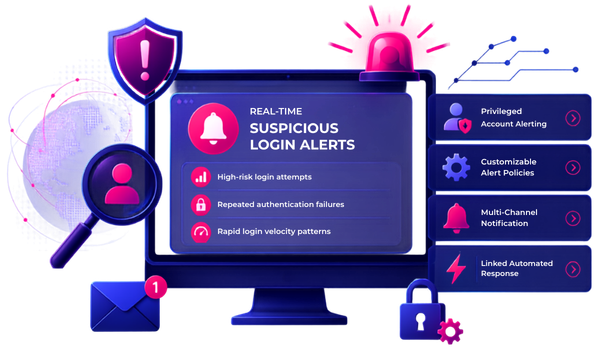
  • Real-Time Suspicious Login Alerts

    Immediate notifications for:
    1. High-risk login attempts
    2. Repeated authentication failures
    3. Rapid login velocity patterns
    Security teams are informed as events occur — not hours later.

  • Privileged Account Alerting


    Administrative and high-privilege accounts receive enhanced monitoring.
    Alerts are prioritized for:
    1. Admin login attempts
    2. Role or permission changes
    3. Sensitive configuration access
    High-impact activity is surfaced first.

  • Customizable Alert Policies

    Organizations can configure:
    1. Risk thresholds
    2. Alert sensitivity levels
    3. Notification channels
    4. Escalation workflows
    Alerting aligns with business risk tolerance and governance needs.

  • Multi-Channel Notification

    Alerts can be delivered via:
    1. Real-time dashboard notifications
    2. Email alerts
    3. System-level notifications
    4. API integrations with external tools
    Ensures rapid awareness across teams.

  • Linked Automated Response

    Alerts can automatically trigger:
    1. Step-up MFA
    2. Temporary account lock
    3. Session termination
    4. Privilege reduction
    Detection and containment operate together — not separately.

Feature Blocks

Immediate Suspicious Login Alerts

No delayed reporting. Administrators are notified in real time as risk events occur.

Impossible Travel Detection

Detect when a user appears to authenticate from geographically distant locations within unrealistic timeframes. Flag abnormal movement instantly.

Login Velocity Monitoring

Identify:
  • Password spraying attempts
  • Credential stuffing behavior
  • Bot-driven automation patterns
Abnormal velocity is flagged before compromise.
Privileged Activity Notifications

Receive alerts when:
  • Admin accounts authenticate
  • Elevated permissions are used
  • Sensitive configuration changes occur
High-risk events are prioritized automatically.
Audit-Linked Alert Records

All alerts are logged and searchable for:
  • Incident investigations
  • Compliance audits
  • Executive reporting
Historical visibility supports governance and forensic review.

Benefits

Reduce Breach Response Time

Identify and contain suspicious activity before it escalates.

Protect Privileged Accounts

Ensure elevated access is continuously monitored and surfaced.

Improve Incident Response

Alert logs provide structured evidence for forensic analysis.

Strengthen Zero-Trust Enforcement

Risk events are surfaced and acted upon in real time.

Enhance Compliance Posture

Maintain documented records of suspicious access events.

Shape Image

Blog & Technical Resources


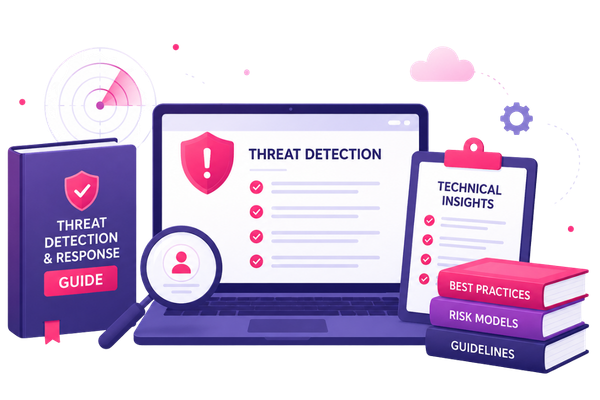
Threat Detection & Response Guides
Rainbow Secure provides technical insights and implementation guidance, including:
  • Detecting credential stuffing in real time
  • Configuring risk-based alert thresholds
  • Monitoring privileged login attempts
  • Designing impossible travel detection models
  • Incident response best practices for identity threats
Each guide includes:
  • Alert configuration strategies
  • Risk evaluation models
  • Response workflow examples
  • Governance recommendations

Image

Frequently Asked Questions

Image

Pricing & Editions


Threat Detection & Alerts
Available as:
  • 24/7 Threat Response & Protection module
  • As part of Rainbow Secure IAM Packages
Pricing depends on:
  • Number of users
  • Integration requirements

Request Security Consultation

Image
Image

Are You Ready For The Action?


Suspicious Activity Should Never Go Unnoticed.
With Rainbow Secure:
  • Real time threat detection
  • Alerts are delivered instantly
  • Responses are automated
  • Risk is contained quickly
See threats before they become breaches.

Credential Abuse Threats and Actionable Advice

Credential abuse is one of the most common cybersecurity threats facing businesses today. Stolen usernames, passwords, and other login information can be obtained through phishing, malware, keyloggers, unsecured networks, and compromised browser data. Attackers can then reuse these credentials to access multiple accounts, steal sensitive information, or move through corporate systems.
The impact can be serious, including data breaches, financial losses, business email compromise, regulatory penalties, and damage to customer trust. Recent security incidents have shown how compromised credentials can provide attackers with access to valuable business systems and data.
Organizations can reduce these risks by focusing on employee security awareness, strong authentication, identity management, and continuous monitoring. Using Single Sign-On (SSO) can reduce the number of passwords employees manage, while Multi-Factor Authentication (MFA) provides an additional layer of protection.
Rainbow Secure also highlights interactive, color-and-style-based authentication as an additional defense against credential theft and automated attacks.
If a credential breach occurs, businesses should preserve logs, isolate affected accounts, reset compromised credentials, force session logouts, and involve security professionals when necessary. A proactive, layered security strategy can significantly reduce the risk and impact of credential abuse.
FROM THE BLOG

Go deeper on identity security

Insights on moving beyond passwords and building phishing-resistant identity.
Your Biggest Security Risk May Already Be Inside Your Company

Your Biggest Security Risk May Already Be Inside Your Company

The most dangerous identity in your organization may not belong to an attacker. It may belong to an administrator.Organizations spend millions detecting external threats.But here’s an…

Read More →
MFA Is Not the Finish Line: Why Identity Security Must Move Beyond the Login

MFA Is Not the Finish Line: Why Identity Security Must Move Beyond the Login

For years, organizations have treated authentication as a security checkpoint:Enter your password → complete MFA → get access.But the threat landscape has changed.Today, attackers don’t necessarily need…

Read More →
The SafePal Breach: When an Order-Tracking Flaw Becomes an Identity Security Crisis

The SafePal Breach: When an Order-Tracking Flaw Becomes an Identity Security Crisis

What a crypto hardware-wallet data breach teaches every CISO about authorization, identity, and the danger of “non-critical” dataA cybersecurity incident does not always begin with…

Read More →


Ready To Get Started ? We're Here To Help

Start your journey with us today. It’s quick, easy, and we’re here to help you every step of the way.
Let’s Talk

Organizations That Trust Rainbow Secure