

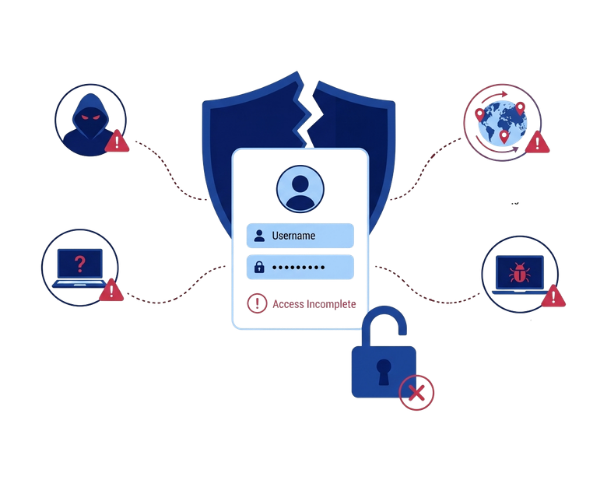
Why Identity-Only Access Is Incomplete
- Use stolen credentials from foreign regions
- Attempt logins from unknown or unmanaged devices
- Leverage anonymized networks and rotating IP infrastructure
- Exploit compromised or non-compliant endpoints
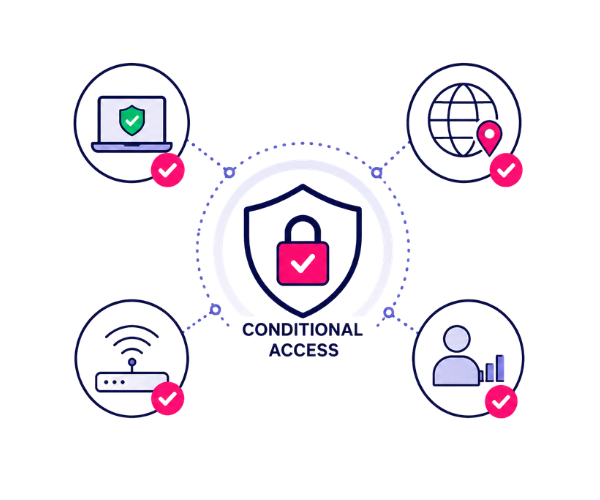
The Architectural Need for Conditional Access
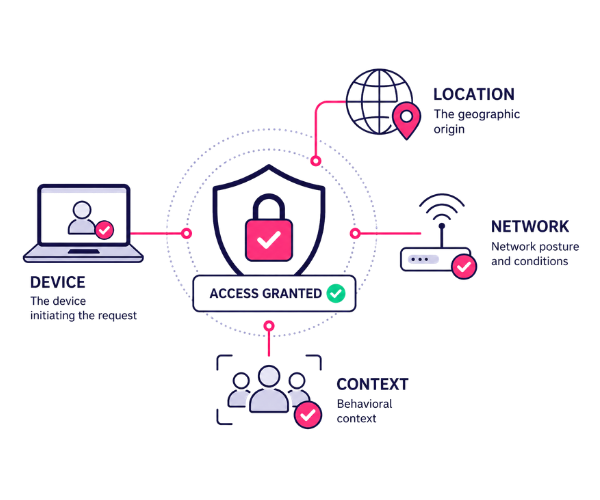
In hybrid and multi-cloud environments, organizations must evaluate:
- Is the device recognized and compliant?
- Is the login originating from an approved geographic region?
- Is the network behavior consistent with expected patterns?
- Does user activity align with normal behavior?
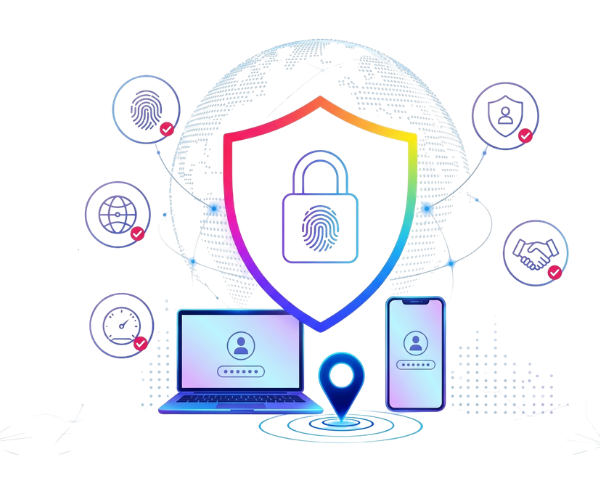
The Rainbow Secure Approach
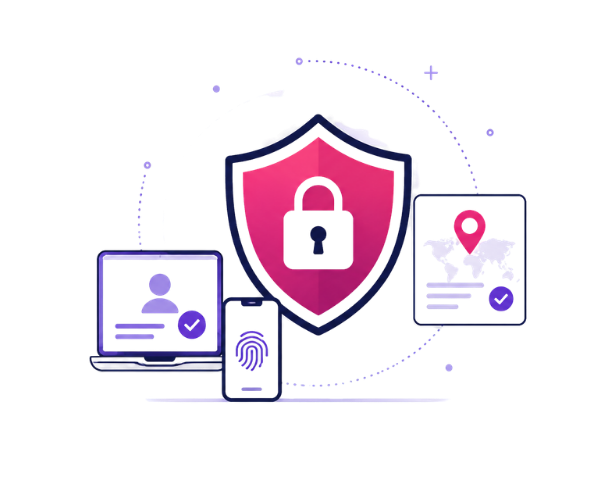
- Trusted device fingerprint recognition
- Geographic and network policy enforcement
- Context-aware dynamic risk scoring
- Adaptive authentication escalation
- Continuous session trust validation
Trusted Device Profiling
Identifies and enforces policies based on known and approved device characteristics.
Geographic Access Policies
Restricts, challenges, or denies authentication from unapproved or high-risk regions.
Risk-Based Conditional Enforcement
Strengthens authentication requirements when device or location signals deviate.
Adaptive Policy Escalation
Dynamically increases verification under elevated contextual risk.
Continuous Trust Monitoring
Re-evaluates device posture and geographic consistency during active sessions.

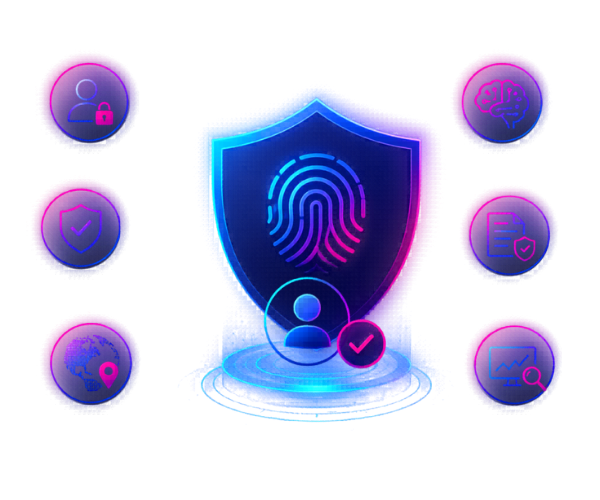
How It Works
- User initiates login
- Identity authentication is validated
- Device fingerprint and geographic signals are analyzed
- Risk engine calculates contextual trust level
- Policy determines allow, deny, or step-up authentication
- Session trust is continuously monitored post-login
Architectural & Business Benefits
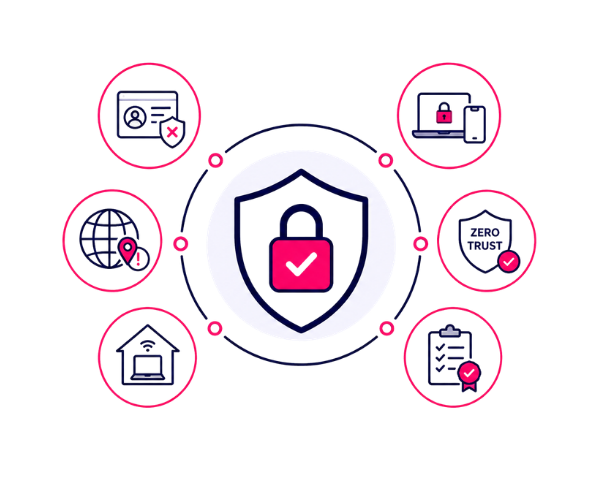
Implementing device and location-based access control enables organizations to:
- Reduce exposure from stolen credentials
- Prevent foreign and anomalous login abuse
- Secure remote and hybrid work environments
- Restrict unauthorized or unmanaged device access
- Strengthen Zero Trust maturity
- Support regulatory and audit requirements
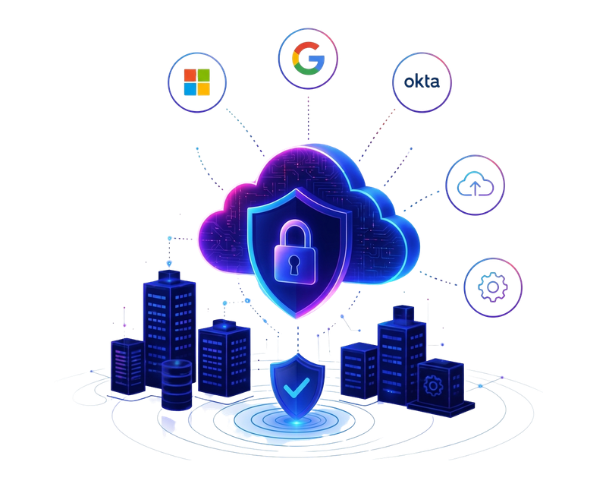
Designed for Cloud-First Enterprises
Rainbow Secure integrates with:
- Microsoft 365 & Entra
- Google Workspace
- Okta and Other IAM Platforms
- SaaS applications
- Custom and legacy systems
Move Beyond Password-Based Trust

Assume credentials will be compromised

Do not rely on user awareness alone

Do not break during peak transaction spikes

Reduce fraud losses and investigation fatigue

Your Biggest Security Risk May Already Be Inside Your Company
The most dangerous identity in your organization may not belong to an attacker. It may belong to an administrator.Organizations spend millions detecting external threats.But here’s an…
Read More →
MFA Is Not the Finish Line: Why Identity Security Must Move Beyond the Login
For years, organizations have treated authentication as a security checkpoint:Enter your password → complete MFA → get access.But the threat landscape has changed.Today, attackers don’t necessarily need…
Read More →
The SafePal Breach: When an Order-Tracking Flaw Becomes an Identity Security Crisis
What a crypto hardware-wallet data breach teaches every CISO about authorization, identity, and the danger of “non-critical” dataA cybersecurity incident does not always begin with…
Read More →