

What Is RBAC?
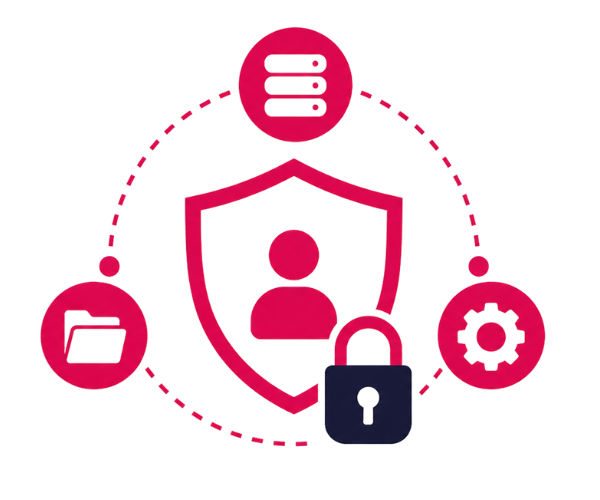
Role-Based Access Control is a governance framework that assigns permissions to defined roles rather than to individual users.
Instead of managing access per person, administrators define:
- Roles (e.g., Finance Manager, HR Analyst, IT Administrator)
-
 The permissions associated with each role
-
Policy rules governing those roles
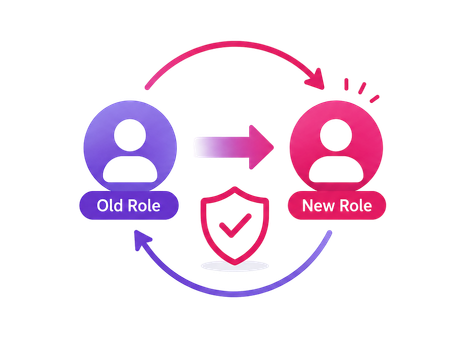
- When a user is assigned a role, they automatically inherit its permissions.
- If their role changes, their access adjusts accordingly.
- This eliminates manual access sprawl and reduces privilege creep.

- Read-only visibility
- Write permissions
- Administrative authority
- Restricted feature access

- Who holds which role
- What permissions each role includes
- Where elevated privileges exist

- Previous permissions are revoked
- New permissions are granted
- Elevated access is reviewed
Nothing additional.
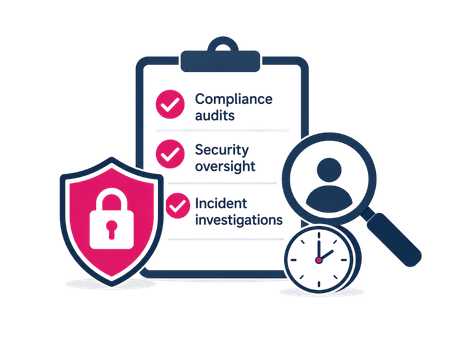
Supports:
- Compliance audits
- Security oversight
- Incident investigations
Reduce Over-Privileged Accounts
Minimize unnecessary access exposure.
Improve Security Posture
Reduce both internal misuse and external exploitation risk.
Simplify Compliance
Increase Operational Efficiency
IT teams manage structured roles instead of individual permission sets.
Strengthen Zero-Trust Architecture
Access decisions are governed by policy logic — not assumptions.


-
Is RBAC suitable for small businesses?
Yes. Structured access control benefits organizations of any size.
-
Can roles be customized?
Yes. Roles can align precisely with business functions, departments, and privilege levels.
-
Does RBAC integrate with MFA and SSO?
Yes. RBAC operates alongside authentication policies, Visual DNA validation, and SSO workflows.
-
What happens when someone changes roles?
Access updates automatically based on the new role assignment.

Pricing & Editions
Role-Based Access Control
- Core IAM functionality
- As part of Rainbow Secure IAM Packages
- Integrated with MFA, SSO, and lifecycle management
- Number of users
- Role complexity
- Deployment scope
Ready To Get Started?
Access should be structured — not accidental.
- With Rainbow Secure RBAC:
-
Permissions are precisely controlled
-
Privilege creep is minimized
-
Governance becomes measurable
-
Zero Trust becomes enforceable
- Define roles clearly. Control access confidently.

Your Biggest Security Risk May Already Be Inside Your Company
The most dangerous identity in your organization may not belong to an attacker. It may belong to an administrator.Organizations spend millions detecting external threats.But here’s an…
Read More →
MFA Is Not the Finish Line: Why Identity Security Must Move Beyond the Login
For years, organizations have treated authentication as a security checkpoint:Enter your password → complete MFA → get access.But the threat landscape has changed.Today, attackers don’t necessarily need…
Read More →
The SafePal Breach: When an Order-Tracking Flaw Becomes an Identity Security Crisis
What a crypto hardware-wallet data breach teaches every CISO about authorization, identity, and the danger of “non-critical” dataA cybersecurity incident does not always begin with…
Read More →